

Let's Get Weird
We've got to do something very different if we're going to win the vaccine fight in the US.

Before I get into it, if you’re a vaccinator, don’t forget to share your story! I’m interested in hearing your perspective about what has and hasn’t changed for you this year.
After the Advisory Committee on Immunization Practices (ACIP) meeting a couple of weeks ago - and after taking a few days to go, “what the hell just happened?” - I came to the realization that the anti-vaccine contingent is winning, and we on the side of evidence-based public health must do something different before we lose too much ground.
You could argue we’ve already lost too much. Right now, measles outbreaks are continuing to ramp up across the US, including one in South Carolina (126 reported cases), totaling more than 1,800 cases in 2025 thus far. Unsurprisingly, cases are popping up in communities with the lowest vaccination rates.
It’s clear that the anti-vaccine movement has succeeded to this point. I’ve asked myself “how?” so many times. So much of it can be seen in how a formerly mundane vaccine policymaking process came roaring into the mainstream.
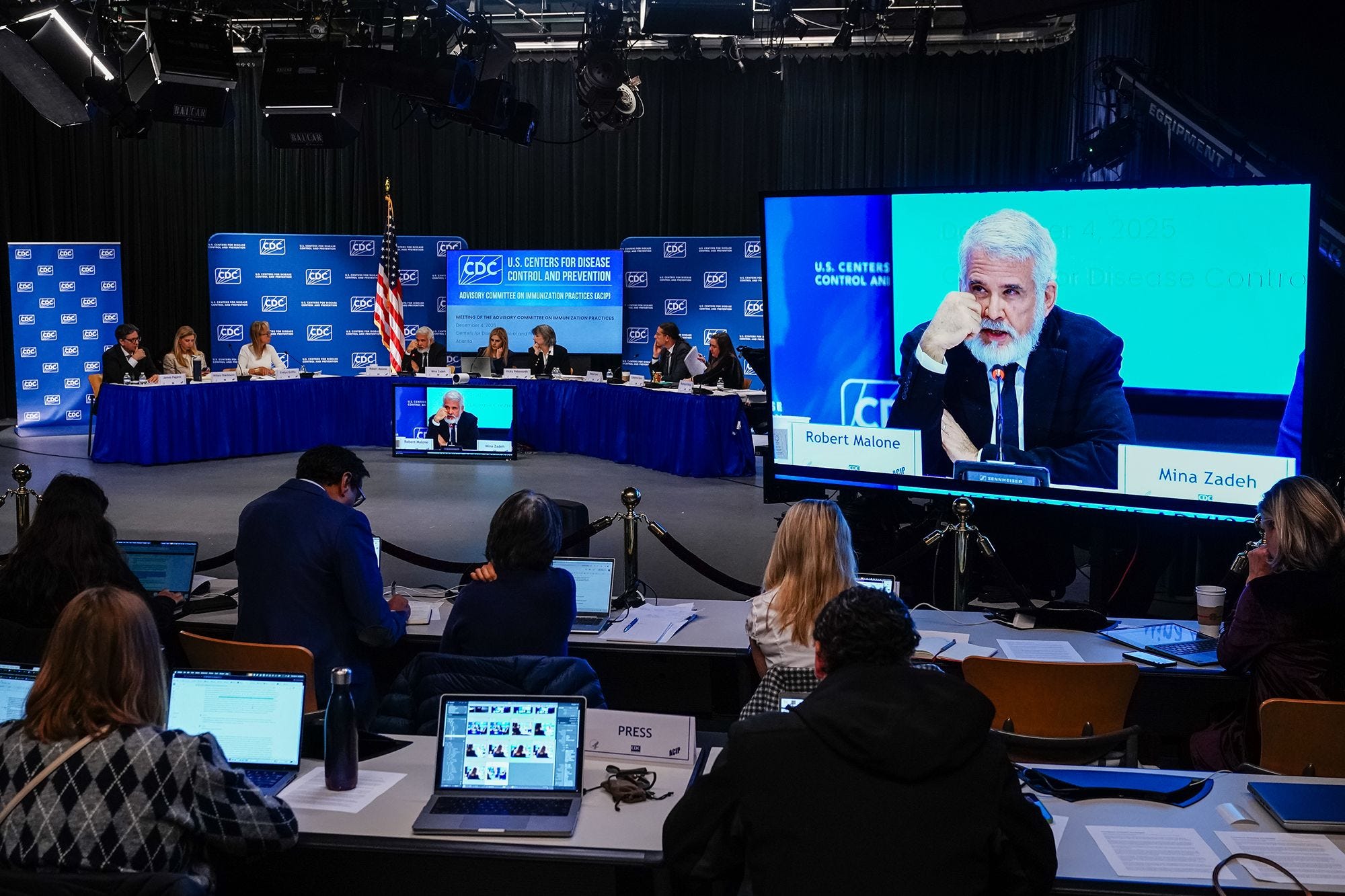
This is likely by design, reinforced by language from ACIP members focused on “individual choice.” They want the public to hear it. Unfortunately, this is not something public health has historically been great at, but that’s not the full picture, as Dr. Jess Steier thoughtfully points out (check out her incredible post with Unbiased Science, below).

Essentially, while public health communication can be imperfect, the anti-vaccine movement has significant financial backing. This funding delta has been exacerbated by steep cuts to public health across the board this year.
So, how do we fight back? (Or rather, how do we continue to fight back, but differently?)
Obviously, we need funding. And then we have to get a little weird with it.
First: Funding
Notable anti-vaccine groups have taken in millions since the COVID-19 public health emergency - Politico reported $15.7 million in revenue for Children’s Health Defense in 2021, for example. It’s not always clear who exactly these funders are, as many donations appear to come from donor-advised funds (which Politico notes are often used by wealthy donors).
Where are public health’s wealthy benefactors? It’s not immediately clear, though a couple come to mind: first, Bill Gates and Melinda French Gates, whose foundation’s US-based work focuses on education and economic mobility. It’s vaccines-focused work is primarily concentrated in lower income countries. Second, Michael Bloomberg and Bloomberg Philanthropies, whose public health and immunization efforts are primarily focused on polio eradication.
From a quick search of Grantmakers.io, another potential supporter could be Mark Cuban, who founded CostPlus Drugs in an effort to make medicines more affordable for patients and whose foundation has donated to a number of healthcare organizations. Other notable philanthropists are Mackenzie Scott, whose often unrestricted donations have given her the title of third-most generous philanthropist this year, and Warren Buffet, who pledged in 2010 to donate 99% of his wealth during his lifetime or upon his death.
Billionaire philanthropy is not without controversy. There’s an implication to some that these donations mean aligning with and promoting the donor’s interests, as observed with political campaign finance. That said, public health has more to gain from increasing engagement with this philanthropy, and many organizations doing this work have explicit policies against implied endorsement and direct advocacy for donor-held positions (e.g., Vaccinate Your Family). Besides, there are incredible people who have been doing incredible work on the ground for decades to combat anti-vaccine sentiment; increasing their funding could allow them to get really creative with their efforts.
To that end…
Second: Getting Weird
The anti-vaccine movement has very successfully used its playbook to make significant strides, leading to our current moment, where one of their most notable leaders in RFK Jr. has taken the helm of the US Department of Health and Human Services (HHS). But what is that playbook, exactly? And, despite some discomfort, how can we use it to further our own objectives?
In 2020, the Center for Countering Digital Hate published The Anti-Vaxx Playbook, which discusses how the anti-vaccine movement effectively “(exploited) social media algorithms’ predilection for controversial and engaging content” to promote the falsehoods that COVID-19 "isn’t dangerous,” that vaccines are dangerous, and that public health cannot be trusted.
The core of their strategy was and continues to be social media. Specifically, CCDH notes that the leading anti-vaccine social media accounts - primarily on Instagram and YouTube - grew their followers by 25% since 2019. Organization around a single, simple, though misinformed narrative allowed that narrative to spread across myriad online spaces, many of which are more accessible than the academic journals vaccine evidence is published in. Further, the report notes that engaging with anti-vaccine activists online to refute their claims allowed this messaging to trend more, reducing the visibility of pro-vaccine messages.
So, how do public health and pro-vaccine advocates reach people when the anti-vaccine movement has become so entrenched in the highest levels of government? Follow the stepwise playbook:
Establish a “master narrative.” A key component of the scientific method is robust inquiry, a deep review of the evidence, and adapting your conclusion to the evidence as it shifts. Of course, this discourse can create confusion among the general public when not communicated in a way that most can understand. On the flip side, appropriate scientific deliberation does not easily lend itself to a single “master narrative,” particularly if we communicate on vaccines broadly. It may instead be easier to pinpoint a key driver of hesitancy - for example, mRNA - and organize a single, evidence-based narrative around it.
Adapt the “master narrative” for online subcultures. The anti-vaccine movement has skillfully leveraged online influencers across different subcultures, including “alternative health entrepreneurs” and “conspiracy theorists,” as CCDH states. That’s not to say that public health advocates aren’t using social media - many are using it effectively, like the Yale School of Public Health - but, as social media and communications researcher Renee DiResta pointed out during a keynote presentation I had the pleasure of attending last month, this reach is fairly limited and insular. Using the single, evidence-based narrative coalesced around in step one, advocates can identify and engage influencers across a range of online spaces and subcultures. Identifying influencers with reach in communities with expressed vaccine hesitancy, like fitness and wellness spaces, can also lead well into step three…
Offering spaces for vaccine-hesitant people. The anti-vaccine movement created “answering spaces” online as a way to pull in the vaccine hesitant. These spaces are presented as accessible, no judgement venues for individuals to express their doubts and get information, but what they did was answer questions with misinformation meant to confirm bias. Pro-vaccine advocates can and should do the same thing: create Facebook groups, Discord servers, and Subreddits dedicated to answering questions from and engaging with the vaccine hesitant in a frank, judgement-free way. These conversations are already happening in visits with healthcare providers, and they should continue to, but their reach is limited to the patient and their friends and family. While not understating the importance of these one-on-one conversations, the anti-vaccine movement is reaching a wider audience through their playbook.
Converting the vaccine-hesitant into advocates. Just like healthcare providers are trained to have conversations with their vaccine-hesitant patients, so can individuals be trained to have these conversations with their friends, their family, and the people they engage with online. The anti-vaccine “answering spaces” have used these platforms to recruit and train activists; the same can be done to promote evidence-based vaccine narratives, too.
Mitigating attacks on online infrastructure. CCDH notes that anti-vaccine activists online have had to migrate followers to alternate platforms when mainstream social media shuts down misinformation, though they also note limited success. That said, in the years since the report’s publication, the practice of removing misinformation from mainstream platforms has largely ceased, particularly with the purchase of X/Twitter by Elon Musk and the announcement that Meta would end its fact-checking practices. So, the pro-vaccine version of this step may be instead to defend online spaces from anti-vaccine activists engaging in practices like doxxing (the identification and publication of personal identifying information on the internet with malicious intent) and brigading (coordinating a campaign to manipulate social media content or harass groups/individuals with overwhelming negative comments).
This isn’t the only solution to combatting the growth of anti-vaccine sentiment in the US, but the groundswell of support for anti-vaccine policies has come from the movement’s work online. To fight it, we’ll have to get a lot more chronically online - get familiar with new platforms and technologies, create judgement-free online zones to support evidence-based information sharing, and be prepared for quite a lot of pushback. And, to go back to my first point, adequate funding is the necessary first step to support these efforts.